Use this guide to help select the right hardware for your door. We cover handing, lock types, finishes, and more.
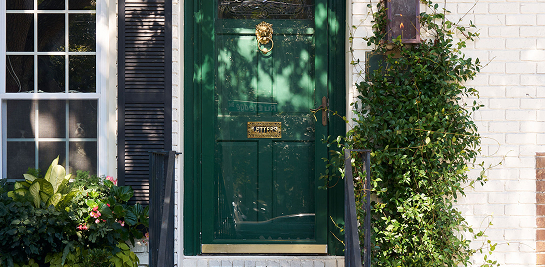
Entry: An exterior door function designed for security, typically featuring a latch and deadbolt operated by a key on the outside and a turn piece on the inside. These are encountered on nearly every exterior door to a home.
Passage: A standard interior function where the knob or lever turns to retract a latch, but the door cannot be locked. These latches are used frequently with closets, sitting rooms, and hallway doors.
Privacy: A standard interior function where the knob or lever turns to retract the latch and can be secured using a push pin, turn piece, or key. They provide privacy and convenience, but not the security of an exterior entry lock. Most privacy sets include an exterior emergency release, often concealed with an escutcheon for a clean appearance. These locks are well suited for bathrooms, bedrooms, powder rooms, and offices.
Lock and Latch Functions
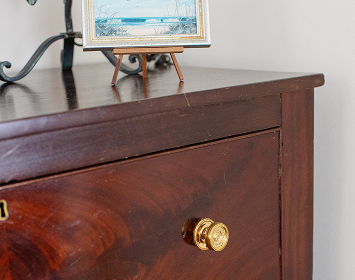
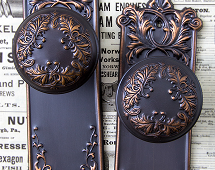
Over time, brass and bronze naturally develop a soft patina that enhances their character.
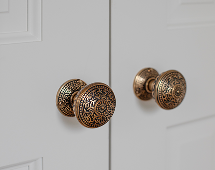
Exterior dummy sets do not use traditional latch or locking mechanisms. Rather, they are fitted with dummy knobs or levers that function as pulls only, matching backplates or rosettes to mirror the active door in a pair. These are usually paired with surface or flush bolts (not included in sets) to secure the door in place.
Interior dummy sets, likewise, do not use a traditional latch or locking mechanism. Instead, they are typically held closed with a ball catch, roller catch, or concealed magnetic catch. Dummy door knobs or levers serve as pulls only, and ensure a continuity of design with the active sets in the home. These doors are commonly used for closets, pantries, and similar interior spaces where privacy or security is not required, and ease of access is preferred. They may be single doors or part of a paired set, depending on the opening and design.
Lock Types
Mortise Locks
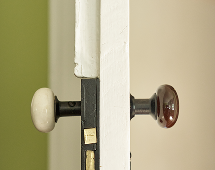
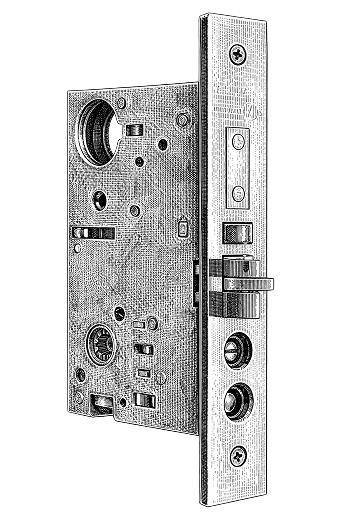
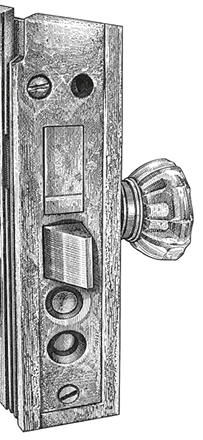
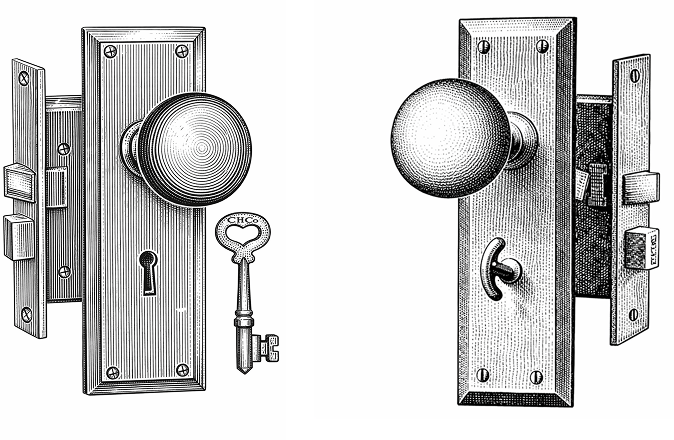
Mortise locks are traditional locking systems installed into a rectangular pocket (mortise) cut into the edge of a door. Known for their durability and longevity, they are commonly found in historic homes and high-end residential construction. Mortise locks are used on both exterior and interior doors. The primary differences between them are size, strength, and function.
Entry Mortise Locks
Entry mortise locks are the foundational locking mechanisms for exterior doors. They offer exceptional security, structural strength, and flexible functionality. Because of their size and spacing requirements, entry mortise locks are not compatible with standard pre-bored doors. Installation typically requires an unprepped slab door, or a door specifically prepared for the lock, with a recommended minimum door thickness of 1-3/4″. All of our Entry Mortise Lock Sets include the lock body, mortise cylinders with trim and keys, knobs or levers, backplates or rosettes, a turn piece mechanism, and spindle.
Mortise Lock Buttons
Entry mortise locks are available with or without stop buttons on the lock face.
Locks without stop buttons offer the simplest operation. The latch bolt is operated by the knob or lever from either side of the door. When the deadbolt is extended, the exterior knob is locked. The deadbolt is retracted by a key from the exterior or the turn piece from the interior.
Locks with stop buttons provide a keyless method of locking the door. Pressing the stop button on the edge of the door when open (i.e. turned “on”) automatically locks the exterior knob or lever, while the interior knob continues to operate the latch bolt. The stop button remains engaged unless manually released (i.e. turned “off”). When turned “on,” re-entry from the exterior requires turning the key in the cylinder. The deadbolt is operated by a key from the exterior and a turn piece from the interior.
Interior Mortise Locks
Interior mortise locks are the staple locking mechanism for interior doors. While smaller than entry mortise locks, they still offer excellent strength and durability. Because of their size and spacing requirements, interior mortise locks are not compatible with standard pre-bored doors. Installation typically requires an unprepped slab door, or a door specifically prepared for the lock, with a recommended minimum door thickness of 1-3/8″. Our interior mortise locks are available in three functions and feature reversible latch bolts for use with any door handing.
Passage Mortise locks serve as the default latching mechanism for doors that do not require privacy. The latch bolt is operated by the knob on either side of the door. All passage mortise lock sets include the lock, knobs or levers, backplates or rosettes, and spindle.
Privacy Mortise Keyed locks are a nod to historic hardware. They function like a passage lock, with the addition of a privacy locking bolt operated by a bit key from either side of the door. These locks are well suited for doors that benefit from a removable locking mechanism, such as storage closets or home offices. All privacy
keyed mortise lock sets include the lock, knobs or levers, backplates or rosettes, bit keys, and spindle.
Privacy Mortise Turn locks also function as passage locks, with the addition of a privacy locking bolt operated by a turn piece on the interior side and an emergency key or tool from the exterior. These locks are ideal for spaces that benefit from a fixed locking mechanism, such as bedroom, bathrooms, or powder rooms. All privacy turn mortise lock sets include the lock, knobs or levers, backplates or rosettes, a turn piece mechanism, and spindle.
Tubular locks are designed for today’s most common door preparation: a factory pre-bored door with a 2-1/8″ diameter and a standard 5-1/2″ center-to-center spacing for entry sets. This preparation is widely used in modern, off-the-shelf doors and is popular for its efficiency and ease of installation. Tubular mechanisms are purpose-built for this standardized door format and offer reliable, straightforward operation. Typical tubular installations accommodate backsets ranging from 2-3/8″ to 2-3/4″, with a recommended minimum door thickness of 1-3/8″.
Because tubular hardware is designed around a 2-1/8″ bore, it is not compatible with undersized backplates or rosettes which do not provide sufficient coverage for the standard pre-bore. Tubular locks are used on both exterior and interior doors.
Tubular entry locks are the most common locking mechanisms used in residential construction today. They offer reliable security, efficient installation, and broad compatibility with factory-prepared doors. The recommended minimum door thickness for these sets is 1-3/4″. Our tubular mechanisms feature reversible latch bolts for use with any door handing.
Tubular Locks
All tubular entry lock sets include the deadbolt and latch bolt mechanisms, cylinder, cylinder collar, knobs or levers, backplates or rosettes, a turn piece mechanism, and spindle.
Interior tubular locksets are designed for use on interior doors and are widely used in modern residential construction. Like their entry counterparts, they offer efficient installation and multiple functions for standard pre-bored doors. Interior tubular mechanisms are compatible with factory-prepared doors and have a recommended minimum door thickness of 1-3/8″. They are not compatible with undersized backplates or rosettes which do not provide sufficient coverage for the standard pre-bore.
Our tubular mechanisms feature reversible latch bolts, allowing them to be used on doors of any handing, and are available in three functions.
Passage latches serve as the standard latching mechanism for doors that do not require privacy. The latch bolt is operated by the knob or lever from either side of the door. All passage latch sets include the latch mechanism, knobs or levers, backplates or rosettes, and spindle.
Privacy latches function like passage latches, with the addition of an integrated privacy locking mechanism. A privacy pin located on the interior rosette or backplate is pressed to lock the exterior knob or lever. The interior knob or lever remains operable at all times and automatically disengages the lock when turned. From the exterior, a discreet emergency release pinhole allows the door to be unlocked using a pin or similar tool, if needed. Privacy latches are ideal for spaces that benefit from light-duty privacy, such as bathrooms or powder rooms. All privacy latch sets include the privacy latch mechanism, knobs or levers, backplates or rosettes with privacy pin, privacy spindle, and emergency release.
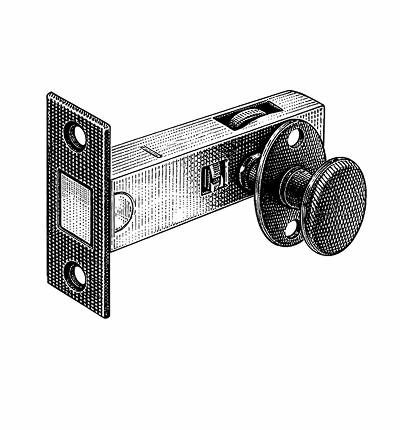
Privacy mortise bolts are standalone privacy locking mechanisms that operate independently from a latch bolt. They function as auxiliary privacy hardware and are commonly paired with doors prepared for tubular passage sets but do not use the standard 2-1/8″ bore. Mortise bolts are included with tubular installation because they use the same size cross-bore as our tubular latches, making their installation familiar and straightforward.
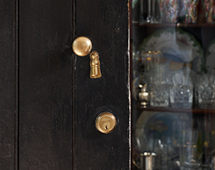
The privacy bolt is operated by a turn piece from the interior side of the door and by an emergency key or tool from the exterior in the event access is required. The exterior emergency access is concealed with a keyhole escutcheon or similar trim, preserving the visual integrity of the door without compromising safety. Privacy mortise bolts are an excellent choice for spaces that benefit from a more substantial and intentional privacy solution, such as bedrooms, private living areas, or storage closets. All privacy bolt sets include the bolt, knobs or levers, back plates or rosettes, turn piece mechanism, and emergency keyhole escutcheon.
Rim Locks
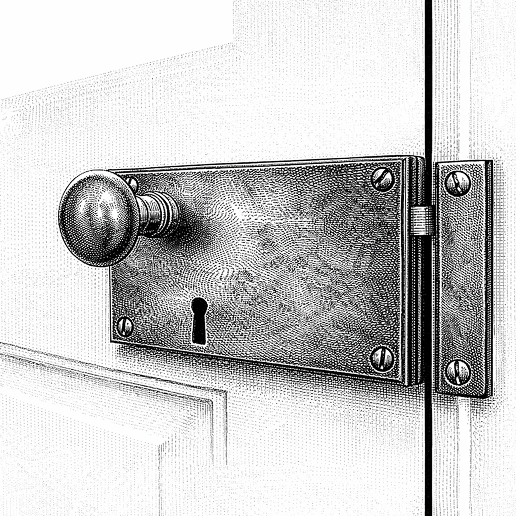
Rim locks are traditional, surface-mounted locking mechanisms that pre-date mortise locks and remained in common use well into the 19th and early 20th centuries. Because they are mounted directly to the surface of the door rather than recessed into it, rim locks are especially well suited for thinner doors or applications where cutting a mortise is not desired.
Rim locks are available for both entry and interior applications and are valued for their straightforward installation and visible craftsmanship. Handing is an important consideration for most rim locks. Because rim locks are surface mounted, they offer flexibility in retrofit and restoration settings while maintaining a historically appropriate appearance.
Entry rim locks are substantial surface-mounted locking mechanisms that combine historic character with dependable modern functionality. The latch bolt is operated by the knob on either side; and the deadbolt is operated by a modern keyed cylinder from the outside and a reproduction bit key or sliding bolt from the interior.
All entry rim lock sets include the rim lock body, rim cylinder and collar with modern keys, an interior bit key, rosette, keeper, and matched pair of rim knobs. Unlike other knob sets, rim knob pairs consist of two different knob styles: one with a standard foot designed to mount at the rosette, and one with a flared foot designed to mount directly to the rim lock body. This distinction ensures proper fit, alignment, and operation.
Entry rim locks require a recommended minimum door thickness of 1-3/8″.
Interior rim locks are available in a variety of sizes, orientations, and functions to accommodate different door styles and nearly any thickness. They are particularly well suited for narrow or lightly built doors where recessed hardware is not practical. Because rim locks are surface mounted, proper sizing and orientation must be considered in relation to the door itself.
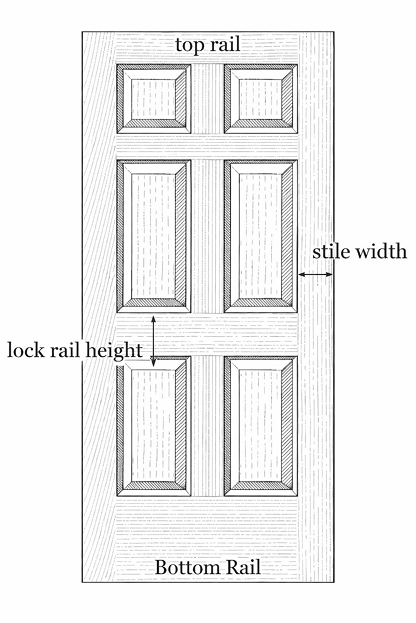
Rim locks are offered in both horizontal and vertical orientations, allowing them to suit different architectural door designs. The selected orientation must align with available mounting surfaces on the door, as the lock body requires a smooth section for proper installation. Door rail and stile dimensions may limit available options.
Handing and door swing must be determined to ensure correct latch operation and selection of the appropriate keeper; however, some of our interior rim locks are reversible. All interior rim lock sets include the rim lock body, interior bit keys, rosette, keyhole escutcheon, and matched pair of rim knobs.
Door Handing
Door handing is always determined from the exterior side of the door (for example: street → entry hall, hallway → bedroom, bedroom → closet).
From the exterior side:
Left Hand (LH):
Hinges on the left; door swings into the room
Left Hand Reverse (LHR):
Hinges on the left; door swings out of the room
Right Hand (RH):
Hinges on the right; door swings into the room
Right Hand Reverse (RHR):
Hinges on the right; door swings out of the room
Measurements to Know
Taking accurate door measurements is essential to selecting the correct hardware. Use the guidelines below to gather the most important dimensions before placing your order.
Door Thickness Measure the thickness of the door from the interior face to the exterior face. Standard interior doors are typically 1-3/8″ thick, while standard entry doors are typically 1-3/4″ thick. Doors that are thicker or thinner than standard may require special components. If your door falls outside these ranges, please contact a sales representative for assistance.
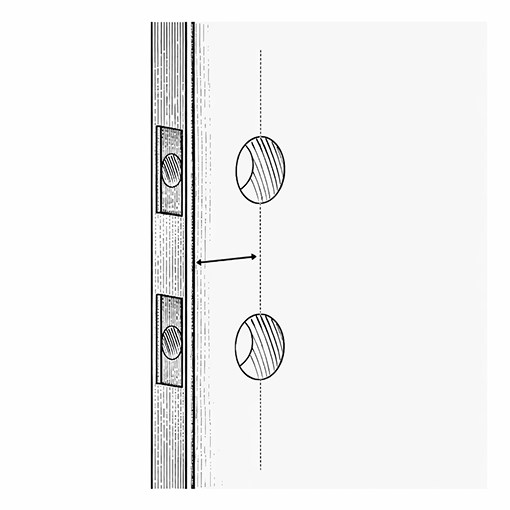
Backset Measure from the edge of the door to the center of the doorknob or lever bore.
Standard residential backsets vary by lock type: Mortise locks: 2-1/2″ or 2-3/4″
Tubular latches and deadbolts: 2-3/8″ or 2-3/4″
Center-to-Center Spacing Measure from the center of the upper bore hole to the center of the lower bore hole. This dimension is critical when selecting new hardware for an existing door preparation or when choosing backplates.
Standard center-to-center spacing varies by lock type:
Entry mortise locks: 3-1/2″ on the exterior, 2-1/4″ on the interior Interior mortise locks: 2-1/4″ on both sides of the door Tubular locksets: 5-1/2″ on both sides of the door
Stile Width Measure from the edge of the door to the nearest edge of any panel, molding, or glass. This measurement helps ensure proper placement and centering of door hardware, particularly on doors with narrow stiles.
Stay Updated
Subscribe for exclusive offers, new arrivals, and stories celebrating design, craftsmanship, and home inspiration.1